
New? Come—Play Newcomb!
If you’ve ever turned your gaze toward the net near our tennis court, you’ve surely noticed people playing what looks like a weird version of volleyball.
“Throwball.” “Catchball.” “Cachibol.” “Prisoner Ball.” “Hooverball.” “Scottyball.” “Mamanet.” … When your author was little, she thought the name of the game was “Nuke 'Em!” (But then, she also thought the big kids at Woodland Hills had made it up.)
Know this, though: Newcomb is no volleyball knock-off, baby. It couldn’t be! That game they’re playing over there, in their bare feet? It actually came first.
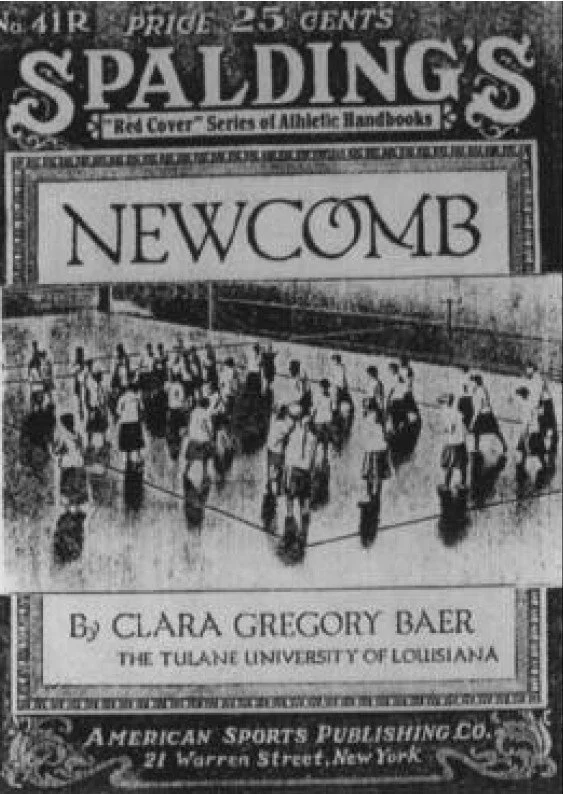
Spalding’s List of Sports, 1914
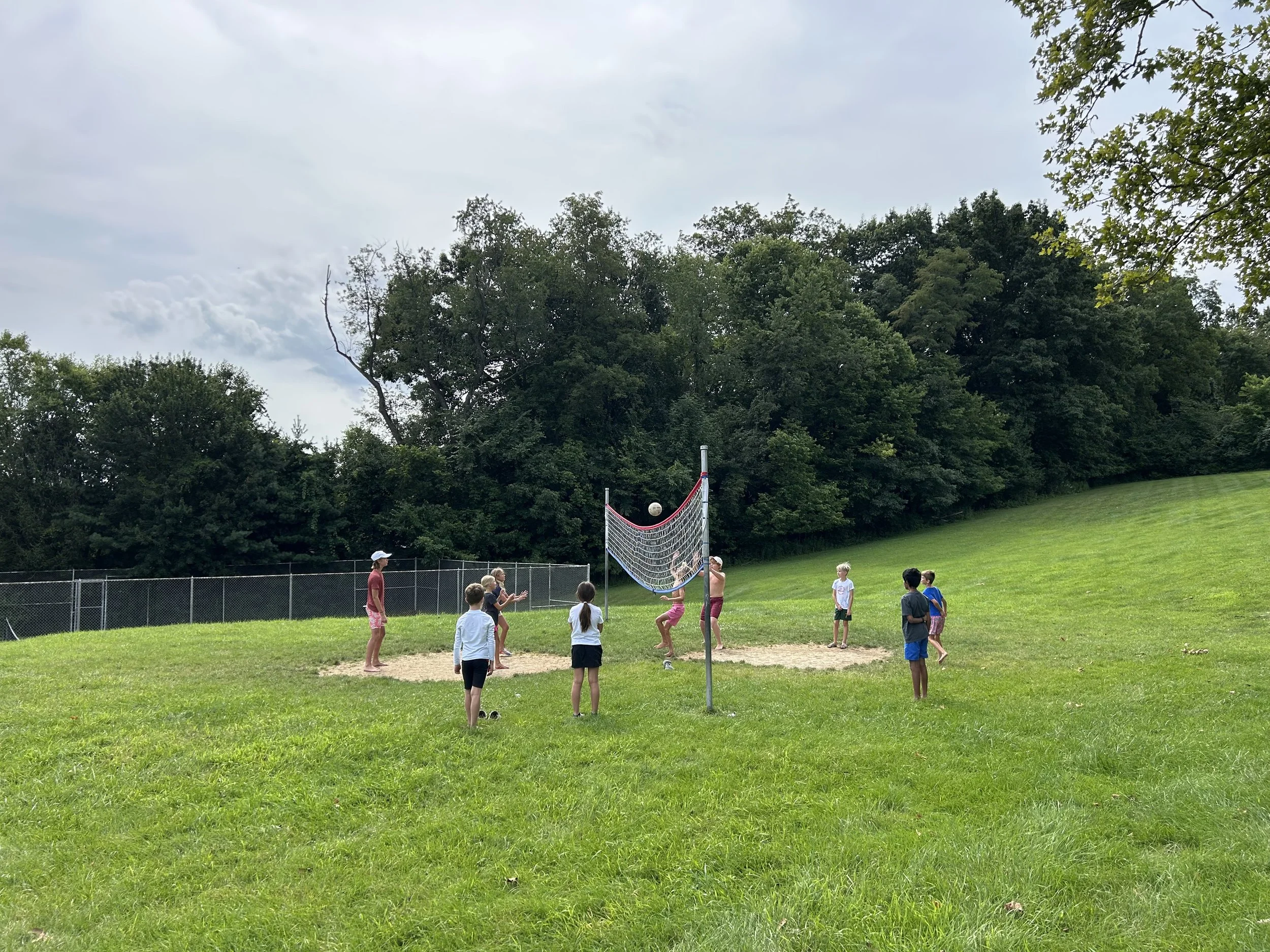
The original description and rules for "Newcomb ball” were published in January of 1895 in the Posse Gymnasium Journal, so named in honor of Newcomb game advisory committeewoman Baroness Rose Posse, President of the Nils Posse Normal School of Gymnastics in Boston, Massachusetts.
Volleyball? Volleyball wouldn’t make its debut until much, much later—that February.
Invented by a Physical Education instructor at H. Sophie Newcomb Memorial College, the coordinate women’s college of Tulane University in New Orleans, Newcomb was born when the instructor’s Narragansett Manufacturing Company shipment of basketball hoops got delayed.
Newcomb inventor Clara Gregory Baer had been hired in 1891 to start a Physical Education department at Newcomb College. After founding that department, she also started the first four-year degree program in Phys Ed, as well as the first P.E. teacher-certification course in the southern United States.
Baer created Newcomb to give her students a chance to practice the ball-handling skills they would need for playing basketball. In fact, she authored the first published rules of women's basketball—which she originally called “Basquette”—plus, she played a pivotal part in the early development of netball.
How great, right? Now you want to play too? Cool—see you there, next Adult Swim!
We’ll just toss you this parting thought from Wikipedia: “Today Newcomb ball is not widely played on a competitive basis, but remains a popular game for people with limited athletic ability.”
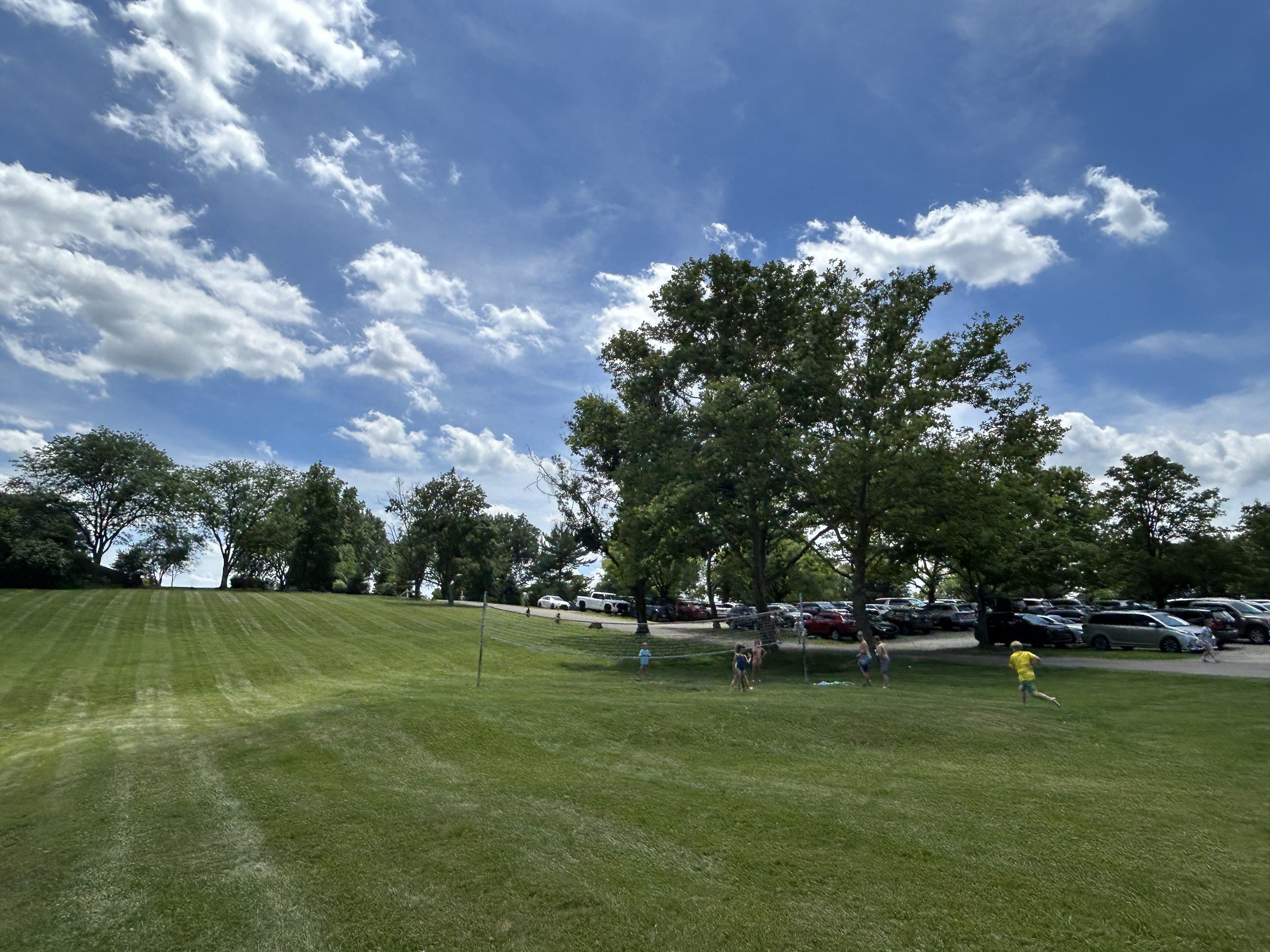
As always, we invite you to share your fond Woodland Hills memories!